



A brief history
Dubai is the most famous of the seven Emirates that constitute the United Arab Emirates (UAE).
The story of ‘modern’ Dubai is relatively short. The Emirate has been established for thousands of years, yet within the last few decades, Dubai has transformed itself into the ambitious, dynamic Emirate we experience today.
In 1894, the introduction of full tax exemption invited traders around the world to take advantage of the Emirate’s unique benefits. In the 1940’s and 50’s, Dubai prospered in the gold trade, providing a strong economy for its 40,000 population.
It wasn’t until the mid 1960s when Dubai recognised their gold trading power was only the start of it. With the discovery of oil, the Emirate’s economy went into overdrive, leading to a massive influx of foreign workers.
In 1973, Dubai joined the other Emirates to adopt a single, uniform currency: the UAE dirham. In the late 70s, the Jebel Ali Free Zone was created, comprising the world largest port and providing foreign countries and businesses unrestricted import and export.
Dubai today
As oil prices increased, Dubai focused closely on free-trade and tourism, replicating the success of the Jebel Ali Free Zone with other clusters of free zones.
Dubai Internet City and Media City were two of the original free-zones, offering foreign companies the tax free commercial space so highly sought after. With thousands of companies moving offices to Dubai, the demand for residential real estate was unprecedented. The world’s eyes turned on Dubai, with investors looking to invest in Dubai property before construction even began.
In 2002, The Crown Prince of Dubai made a commitment to allow foreign nationals to own a property freehold within the Emirate. This was followed in 2006 with the publication of the lands law allowing foreign nationals the right to register their freehold property.
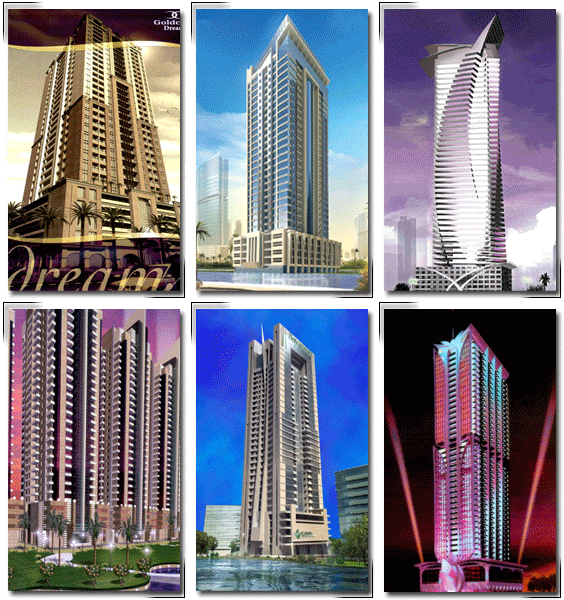
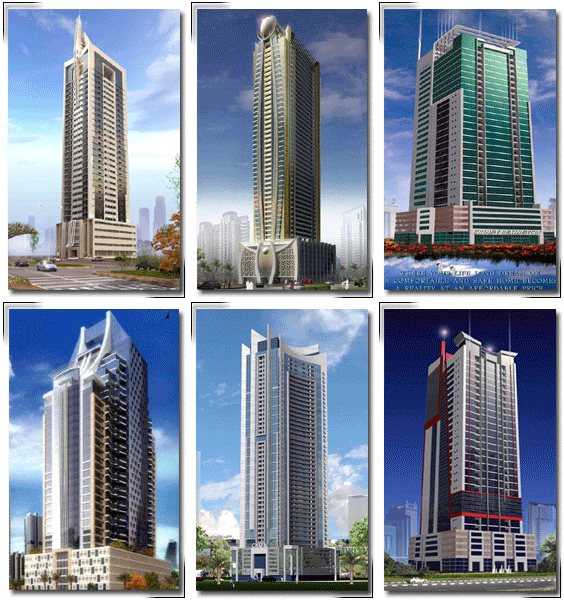
With the population rising dramatically to over 1.5 million by 2007, the demand for residential property and living space continually forces rental and land prices up, doubling and tripling the cost of living in record time. Jumeirah, the area in which Internet and Media City exist, has been developed into the residential centre of Dubai. Dubai Marina, Jumeirah Islands and The Palm Jumeriah are a few of the exclusive luxury areas of Dubai offering residents and visitors a wide range of Dubai investment property .
Led by H.H Mohammed bin Rashid Al Maktoum and family, Dubai is firmly establishing itself as the business hub of the Middle East. Dubai’s contemporary vision has attracted some of the most ambitious, innovative and elegant development projects in the world.
Today Dubai is the home of the world’s only 7-star hotel, the Burj Al-Arab, a favourite haunt of the rich and famous. The Burj Dubai looks set to be the world’s tallest building and the Mall of Arabia is expected to be the largest shopping mall ever built. Add to all this the incredible 300 man-made islands that make up The World development and the fact that Interpol cite Dubai as one of the safest cities on the planet, it’s no surprise that the Emirate is recognised as a No1 holiday destination.
Dubai hosted seven million tourists in 2007, with projections for 10 million by 2010 and 15 million by 2015. Average rents in residential apartments in Dubai increased nearly 50 per cent in the past year and rent increases in the northern emirates such as Ras Al Khaimah look set to follow, according to a latest industry report. Add this to the fact that Dubai has one of the highest hotel occupancy in the world and it’s easy to see why investors look to Dubai.
Dubai is the most famous of the seven Emirates that constitute the United Arab Emirates (UAE).
The story of ‘modern’ Dubai is relatively short. The Emirate has been established for thousands of years, yet within the last few decades, Dubai has transformed itself into the ambitious, dynamic Emirate we experience today.
In 1894, the introduction of full tax exemption invited traders around the world to take advantage of the Emirate’s unique benefits. In the 1940’s and 50’s, Dubai prospered in the gold trade, providing a strong economy for its 40,000 population.
It wasn’t until the mid 1960s when Dubai recognised their gold trading power was only the start of it. With the discovery of oil, the Emirate’s economy went into overdrive, leading to a massive influx of foreign workers.
In 1973, Dubai joined the other Emirates to adopt a single, uniform currency: the UAE dirham. In the late 70s, the Jebel Ali Free Zone was created, comprising the world largest port and providing foreign countries and businesses unrestricted import and export.
Dubai today
As oil prices increased, Dubai focused closely on free-trade and tourism, replicating the success of the Jebel Ali Free Zone with other clusters of free zones.
Dubai Internet City and Media City were two of the original free-zones, offering foreign companies the tax free commercial space so highly sought after. With thousands of companies moving offices to Dubai, the demand for residential real estate was unprecedented. The world’s eyes turned on Dubai, with investors looking to invest in Dubai property before construction even began.
In 2002, The Crown Prince of Dubai made a commitment to allow foreign nationals to own a property freehold within the Emirate. This was followed in 2006 with the publication of the lands law allowing foreign nationals the right to register their freehold property.
With the population rising dramatically to over 1.5 million by 2007, the demand for residential property and living space continually forces rental and land prices up, doubling and tripling the cost of living in record time. Jumeirah, the area in which Internet and Media City exist, has been developed into the residential centre of Dubai. Dubai Marina, Jumeirah Islands and The Palm Jumeriah are a few of the exclusive luxury areas of Dubai offering residents and visitors a wide range of Dubai investment property .
Led by H.H Mohammed bin Rashid Al Maktoum and family, Dubai is firmly establishing itself as the business hub of the Middle East. Dubai’s contemporary vision has attracted some of the most ambitious, innovative and elegant development projects in the world.
Today Dubai is the home of the world’s only 7-star hotel, the Burj Al-Arab, a favourite haunt of the rich and famous. The Burj Dubai looks set to be the world’s tallest building and the Mall of Arabia is expected to be the largest shopping mall ever built. Add to all this the incredible 300 man-made islands that make up The World development and the fact that Interpol cite Dubai as one of the safest cities on the planet, it’s no surprise that the Emirate is recognised as a No1 holiday destination.
Dubai hosted seven million tourists in 2007, with projections for 10 million by 2010 and 15 million by 2015. Average rents in residential apartments in Dubai increased nearly 50 per cent in the past year and rent increases in the northern emirates such as Ras Al Khaimah look set to follow, according to a latest industry report. Add this to the fact that Dubai has one of the highest hotel occupancy in the world and it’s easy to see why investors look to Dubai.


No comments:
Post a Comment